
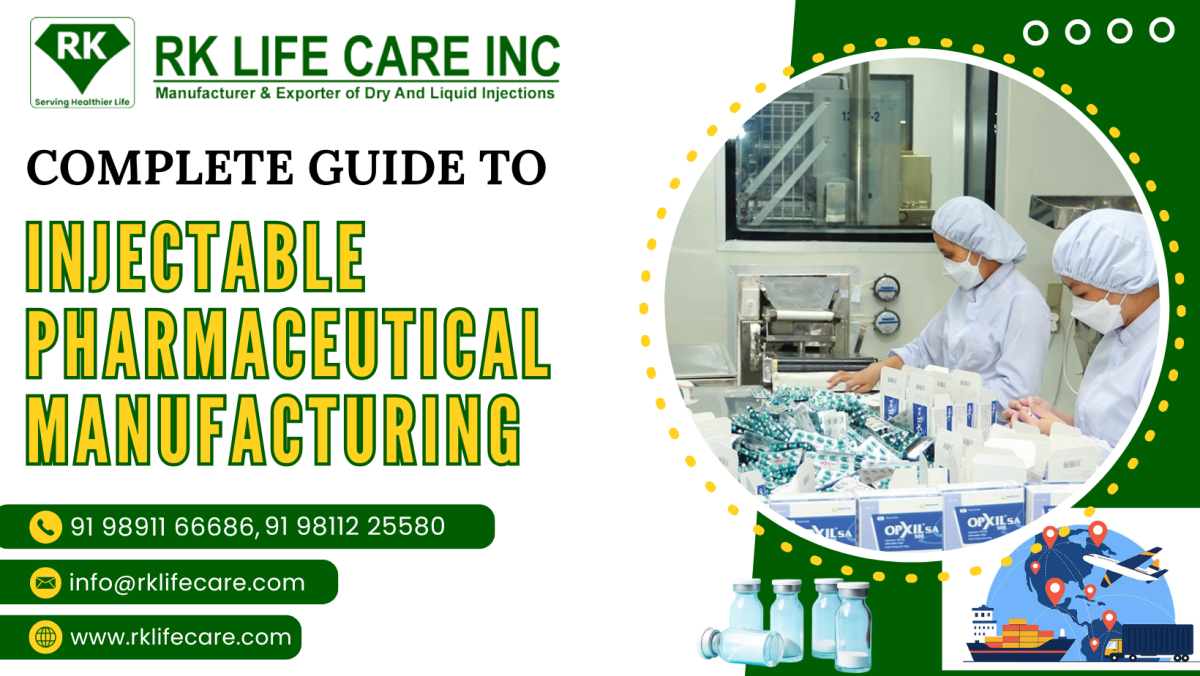
The pharmaceutical industry in India is growing rapidly, and one of the most advanced and high-demand segments is injectable pharmaceutical manufacturing. With the rise in hospital infrastructure, increasing chronic diseases, and the need for fast-acting medications, injectable drugs have become a critical part of modern healthcare.
From life-saving antibiotics to critical care treatments, injectables are widely used in hospitals, ICUs, and emergency settings. This complete guide will help you understand the manufacturing process, plant setup, cost, compliance, and how to choose the right injectable manufacturer in India.
What is Injectable Pharmaceutical Manufacturing?
Injectable pharmaceutical manufacturing is the process of producing sterile drug formulations for administration directly into the body via injection under controlled aseptic conditions.
These medicines are primarily used in:
- Hospitals and ICUs
- Emergency treatments
- Surgical procedures
- Infection and critical care management
Quick Answer:
Injectable pharmaceutical manufacturing involves producing sterile medicines in contamination-free environments to ensure safety, purity, and rapid therapeutic action.
Types of Injectable Formulations
Understanding different types of injectables is essential for both manufacturers and pharma businesses:
1. Liquid Injections
Ready-to-use sterile solutions are used in intravenous (IV) and intramuscular therapies.
2. Dry Powder Injections (Lyophilized)
Freeze-dried formulations that require reconstitution before use. These offer better stability and longer shelf life, especially for antibiotics.
3. Suspension Injections
Contain fine drug particles suspended in liquid, commonly used for long-acting treatments.
4. Emulsion Injections
Used in specialized therapies such as vaccines and hormone-based treatments.
Step-by-Step Injectable Manufacturing Process
Injectable manufacturing is a highly controlled and precise process:
Formulation Development – Designing stable and effective drug composition
Water for Injection (WFI) – Use of ultra-pure water as a solvent
Sterile Filtration – Removal of microorganisms and particles
Aseptic Filling – Filling the product in sterile cleanroom environments
Lyophilization (for Dry Injections) – Freeze-drying to improve stability
Sealing & Packaging – Controlled and contamination-free sealing
Quality Testing – Sterility, endotoxin, and stability testing
Cleanroom & Sterility Requirements
Sterility is the backbone of injectable manufacturing, as even minor contamination can make an entire batch unsafe.
Standard Requirements:
ISO Class 5 (critical filling zone)
ISO Class 7 & 8 (background areas)
HEPA filtration systems
Positive pressure airflow
Strict gowning and hygiene protocols
Regulatory Requirements in India
Injectable pharmaceutical manufacturing must comply with strict regulations, including:
WHO-GMP certification
CDSCO guidelines
ISO standards
GLP compliance
Validation processes such as IQ (Installation Qualification), OQ (Operational Qualification), and PQ (Performance Qualification) ensure consistent product quality.
Machinery Required for Injectable Manufacturing
Setting up a manufacturing unit requires advanced equipment such as:
Vial washing machines
Sterilization tunnels
Filling and sealing machines
Lyophilizers (for dry injections)
Autoclaves
HVAC cleanroom systems
Cost of Setting Up an Injectable Manufacturing Plant
Injectable manufacturing is capital-intensive due to strict infrastructure and compliance requirements.
Estimated Investment:
Small-scale setup: ₹5–10 Crore
Medium-scale plant: ₹10–25 Crore
Large-scale facility: ₹25+ Crore
Major Cost Factors:
Cleanroom infrastructure
Machinery and equipment
Regulatory approvals
Skilled workforce
Many businesses prefer third-party manufacturing to avoid high initial investment and reduce risk.
Aseptic Manufacturing in Injectables
Aseptic manufacturing refers to producing sterile pharmaceutical products in contamination-free environments using advanced cleanroom systems and strict hygiene protocols. This ensures that injectable medicines remain safe for direct administration into the body.
Lyophilized (Dry Injection) Process Explained
Lyophilization, or freeze-drying, is used to remove moisture from pharmaceutical products, improving their stability and shelf life. These injections are reconstituted with a sterile solvent before use.
Third-Party Injectable Manufacturing (Best Low-Risk Model)
Setting up your own manufacturing facility can require an investment of ₹10+ crore. To avoid this, many pharma businesses choose third-party manufacturing.
Benefits:
Launch your own brand without heavy investment
Use WHO-GMP certified facilities
Focus on marketing and distribution
Faster market entry and scalability
How to Choose the Best Injectable Manufacturer in India
Selecting the right manufacturing partner is crucial for business success.
Key Factors to Check:
WHO-GMP certification
Advanced sterile infrastructure
Product range (dry + liquid injections)
Quality control systems
Timely delivery capability
Experience in hospital-demand products
Best Injectable Pharmaceutical Manufacturing Company in India
India has many pharmaceutical manufacturers, but only a few specialize in injectable production. Working with a specialized company ensures better quality, sterility, and consistency.
Why Choose RK Life Care Inc for Injectable Manufacturing?
When it comes to reliable, specialized injectable manufacturing, RK Life Care Inc is a trusted name in the industry.
Key Advantages:
✔ Advanced sterile manufacturing facility in Jhajjar, Haryana
✔ Expertise in dry (lyophilized) injections
✔ Wide range of antibiotic and critical care products
✔ Human and veterinary injectable portfolio
✔ WHO-GMP compliant processes
✔ Strict batch-wise quality testing
Unlike general pharma companies, RK Life Care Inc focuses specifically on injectable manufacturing, ensuring higher product quality and consistency.
If you want to launch your own injectable brand without investing crores, partnering with RK Life Care Inc can help you reduce risk and scale faster.
Injectable vs General Pharma Business
| Factor | General Pharma | Injectable Pharma |
|---|---|---|
| Investment | Low | High |
| Profit Margin | Medium | High |
| Competition | High | Low |
| Demand Type | Retail | Hospital-based |
Market Growth & Future Scope
The Indian pharmaceutical market is expected to reach $130 billion by 2030, driven by:
Increasing hospital infrastructure
Rising demand for critical care drugs
Growth in veterinary healthcare
Strong export opportunities
Injectable pharmaceuticals will continue to dominate high-value segments in the coming years.
Challenges in Injectable Manufacturing
High capital investment
Strict regulatory compliance
Risk of contamination
Requirement for skilled workforce
These challenges make third-party manufacturing a smart and practical entry strategy.
Ready to Start Your Injectable Pharma Business?
Success in the injectable pharma industry depends on choosing the right manufacturing partner.
Instead of investing heavily in infrastructure, you can collaborate with an experienced and specialized company to grow faster and more efficiently.
RK Life Care Inc offers:
Third-party injectable manufacturing
Custom product development
Reliable supply chain
High-demand hospital products
Contact RK Life Care Inc today to start your injectable pharma business with a trusted manufacturing partner.
Comments
No comments yet. Be the first to share your thoughts!
Leave a Comment